Slowly, but surely

My stomach virus ended up keeping me off of my feet as far as running is concerned for a whopping 10 days consecutively, excepting a hash, which sort of counts as running, but the exertion seemed to retard my recovery another 24-48 hours, but, c’est la vie. Since then, I’ve been trying to get myself back on my feet, and feel like a runner again. With the combination of hurting my foot on a recovery run several weeks ago, a solid  head cold, and the most recent illness, November has been the lowest mileage month of the year. The rest hasn’t gone completely to waste, and without any races looming in the immediate future, I don’t feel too guilty about it, but it’s nice to be starting to feel like a proper runner again, as opposed to the pseudo-recreationalist/couch potato that my logbook demonstrates for November.

As I’ve returned to the roads/trails I’ve noticed that my fitness has certainly diminished some, but in ways I didn’t quite expect. My endurance is understandably down, but more noticeable, is my erratic pace-rhythm. I’ve always been subject to positive splits, sometimes dramatic, sometimes understandably subtle, but in the recent days, I’ve found that positive splits are running my life… Part of this is likely derived from my abundant excitement to be running again, resulting in my heading from the car at ~7min pace on technical trails, which in my current state (or even when I’m very fit) is typically a ticking time bomb for walking, or at the very least, slowing down dramatically. Strange, however, is the fact that my body seems to be adjusting to this haste out of the gate, allowing me to crush former best times on many of my regular courses through the first 7 or so miles, which is when things seem to begin to fall apart, yielding mediocre overall times. So with some luck, I’ll be able to continue to push the boundaries, and eventually start knocking some serious time off of my regular runs, especially once i re-acquaint myself with the necessary pacing-distance ratios.

As far as the foot is concerned, it’s still not quite 100%, but I think I’ve figured out what’s exacerbating the discomfort, and how to change things so that it can both heal, and keep me running. I’ve returned to running roads, not exclusively, but substantially more than trails, which seemed to be aggravating my foot the most, and noticed that my cadence/balance was different on the road than it was on the trails. Part of this is the obvious necessity of negotiating roots/rocks/other technical aspects, but I think to an extent I had allowed myself to become formally lazy, since I wear a more built up shoe on the trail than I do on the road (more on this later). My trail shoes are still what most people would consider a “minimalist” shoe, but they’re still much more built up than my typical road shoe. Now I’m not an advocate of overly minimal trail shoes, as they simply don’t offer enough protection for the speed/distance/technicality of my regular runs, but the more protection, the more it hides form issues, this of course, is the trade-off. So running some in my road shoes has discouraged over-striding, as well as increased my turnover rate, which yields less impact on my sore foot, in addition, it’s facilitated a more mid-foot oriented strike, which i think is better balanced than an pure forefoot, thus engaging my calf more, and the foot a little bit less. So right now, the plan is to run a lot on roads to regain some fitness, and hill climbing strength, with the hope that when I return to mostly trail running, I’ll have the stamina to maintain better form throughout the run, and subsequently subject myself to fewer rough landings.

Last weeks summary:

Wed 11/30 1 mile 8:05
Thurs 12/1 AM 3.2 Miles up and down Allamuchy 38:00
PM 5 Miles Broken Shin Loop 44:28
Fri 12/2 4.85 Mostly power line trails 43:06 (near my record time.. ~1 min slower)
Sat 12/3 8.4 miles Schooleys Mountain. 1:40:20 I started out way too fast ~7 min pace, and made it through 3/4 of the loop before things started to break down, undernourished, under hydrated, overdressed, but it felt good to run some familiar trails again, and my splits for the first ~5 miles were way ahead of record pace, of course after that point, the positive split monster came out hard
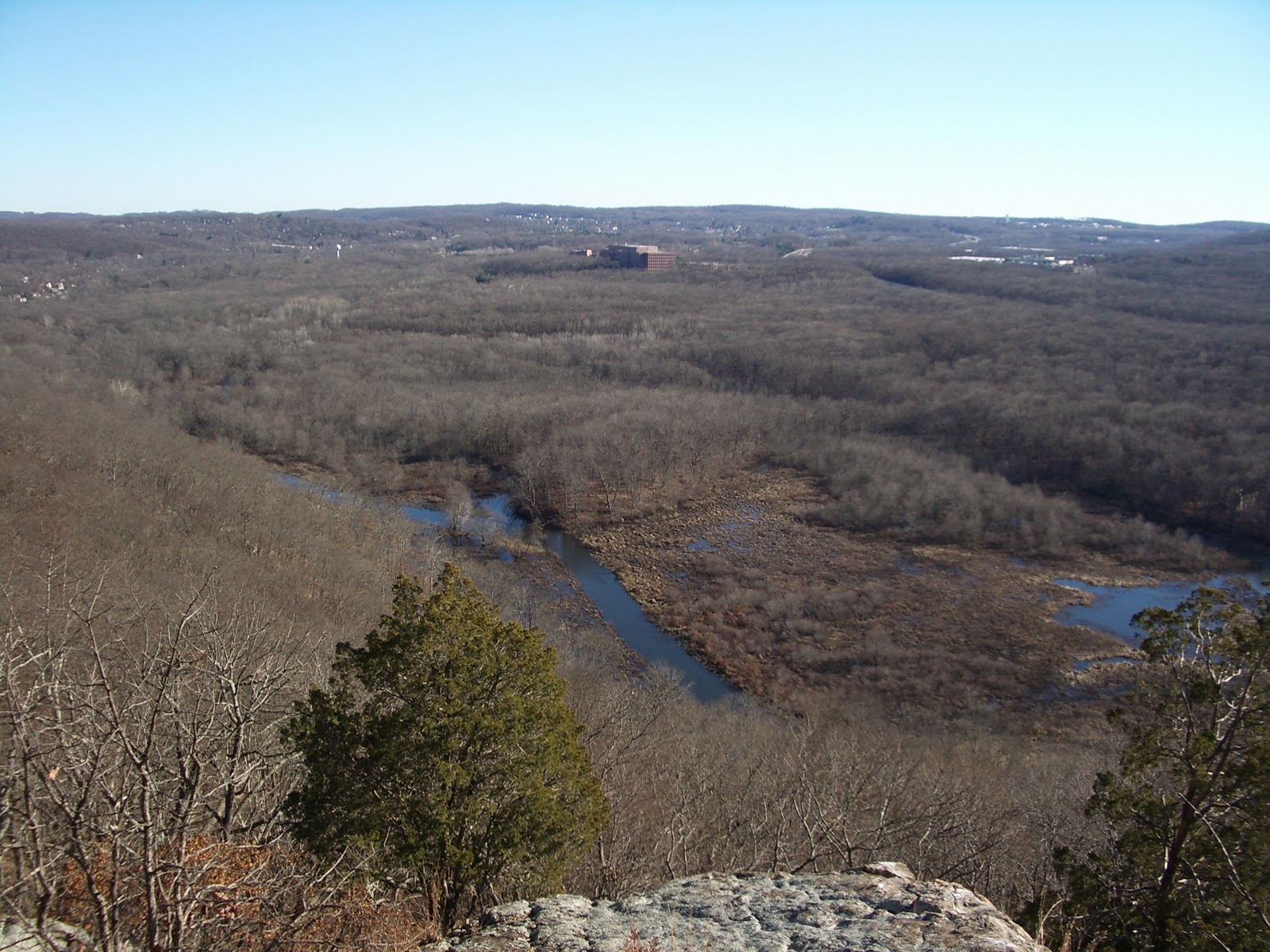
View from Allamuchy

Delicious beer from Adams Beer Garden (it’s good for you, I swear)

Summary 11/12-19

This past week has been the least productive of the year as far as running is concerned, logging a Whopping 7.3 miles for a little over 1 hour of total running time (3.2 and 4.1, 26:44 and 34:25 respectively). My left foot has been bothering me for weeks, and this week I decided that any illusions of ultra-marathons in the next 6-8 weeks being run well is out of the question, so I figured it would be best to rest my foot, and try to let it recover so I can start feeling healthy, and get back into the shape I’ve been yearning for. Taking 5 consecutive days off was rather troublesome however, I think that after a while, you identify yourself so much by what you do, that when you’re not doing it, you begin to lose some of that association, living in the past to a sense. My foot is still not 100% but it’s runnable, and today’s 6 miler made me feel like a real runner again (and the first time I’ve gone shirtless in weeks). On the bright side, the lack of running allowed me to really hone in on my practicing, as well as do some research for upcoming job openings, one of which is in Utah… which has great mountain running, so… we’ll see!
Since there’s not much running to talk about, here’s some great music, by one of my favorite song-writers right now:

Winter Running

If you read any of the running blogs from the Mountain time zone, you’re well aware that they’re already beginning to experience the joys, and perils of winter running, and here on the East Coast, as a result of an unprecedented October snow storm, we have as well.

Many of my friends, both casual runners, and non-runners often ask me how I maintain mileage over the course of the winter, especially as a trail runner, and since last weekend I remembered just how awesome winter runs can be, as well as the oft forgotten downsides of running in sub-freezing temperatures.
So, since many runners I know tend to reduce their mileage, or go towards the treadmill during the winter, I figure I’d try to explain as best as I could, how I maintain my mileage through season. First, attire, everyone has a different approach to cold-weather running, and much like my summer runs, I try to keep things very simple. A pair of tights (yes tights) lightweight baselayer, and a running wind breaker seem to be the most I wear during winter months. A lightweight pair of gloves, and a hat also are helpful. Many runners tend to overdress for cold weather, and end up actually being too warm. The downside of dressing as I do, is that you WILL be cold for the first few miles, the purpose is comfort in the long run, not in the first few miles.

Now, winter runs have their upsides and downsides, the most obvious downside being the negotiation of temperature/wind, hence the windbreaker and other attire mentioned above. The other, less obvious downsides are the shrinking roads as a result of snow (they get so much thinner!) which of course, makes avoiding cars much more of a problem (run trails). Trails however, get faster it seems, especially in the snow, which seems to fill in the changes in terrain, making for fast downhills, and less worry regarding rock avoidance with the extra cushioning. There is, of course, a lack of traction. I’ve found that on normal circumstances, I fall every ~300 miles or so when running technical trails, usually as a result of some mud, wet rocks, or a concentration lapse. On snowy trails, I fall roughly 1.5 times for every 10 miles, this obviously is a result of poor traction, and i expect the ratio to go down as the season progresses, and I get used to it. 
So why run in Winter? Well, here:

Trail Head
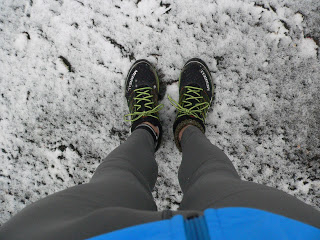
Tights and my Merrell Mix Masters
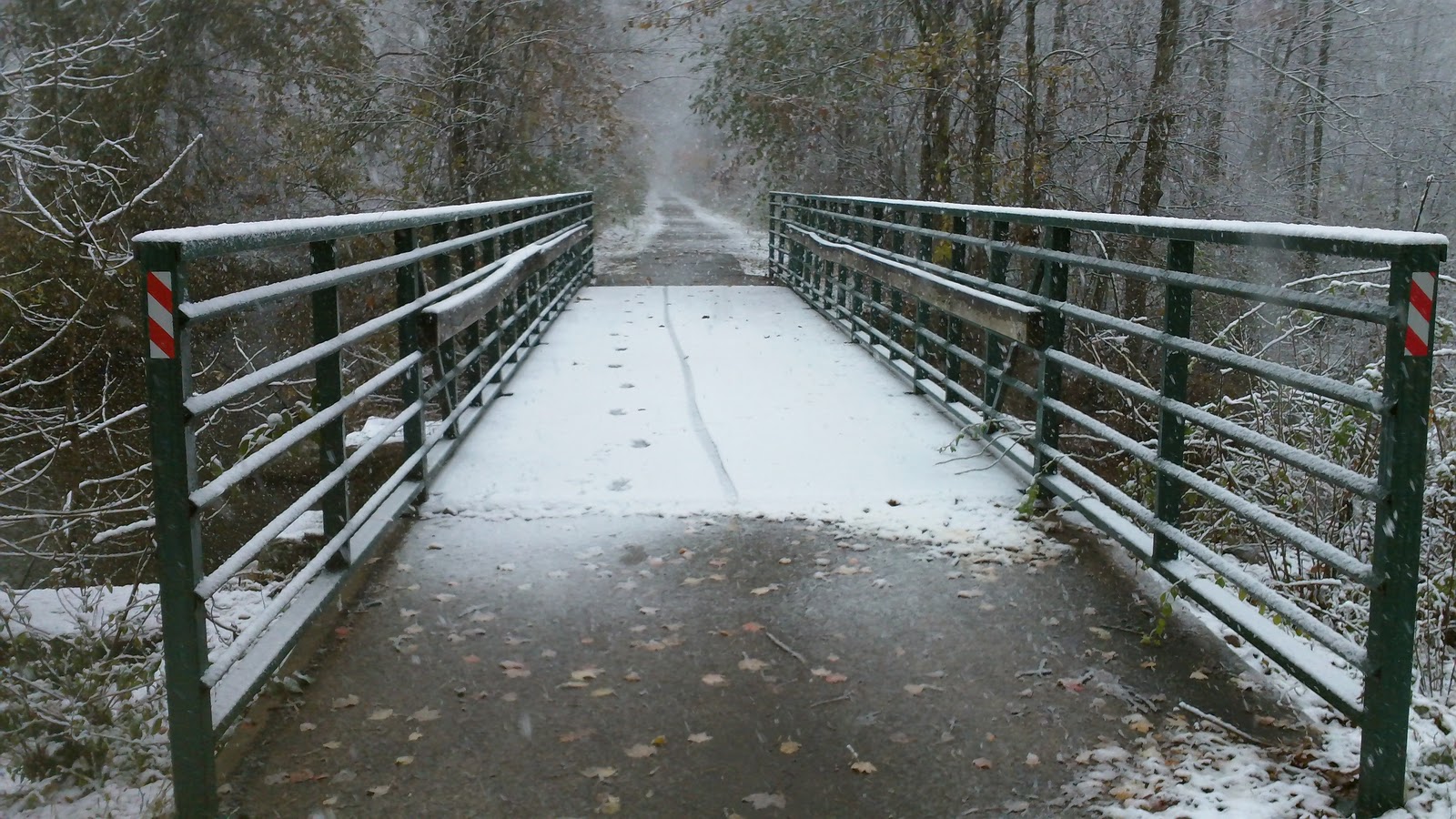
Snowy Bridge on Columbia trail

Blurry Picture, Deer in Snowstorm

Trail heading up Schooley’s Mountain

Long Valley

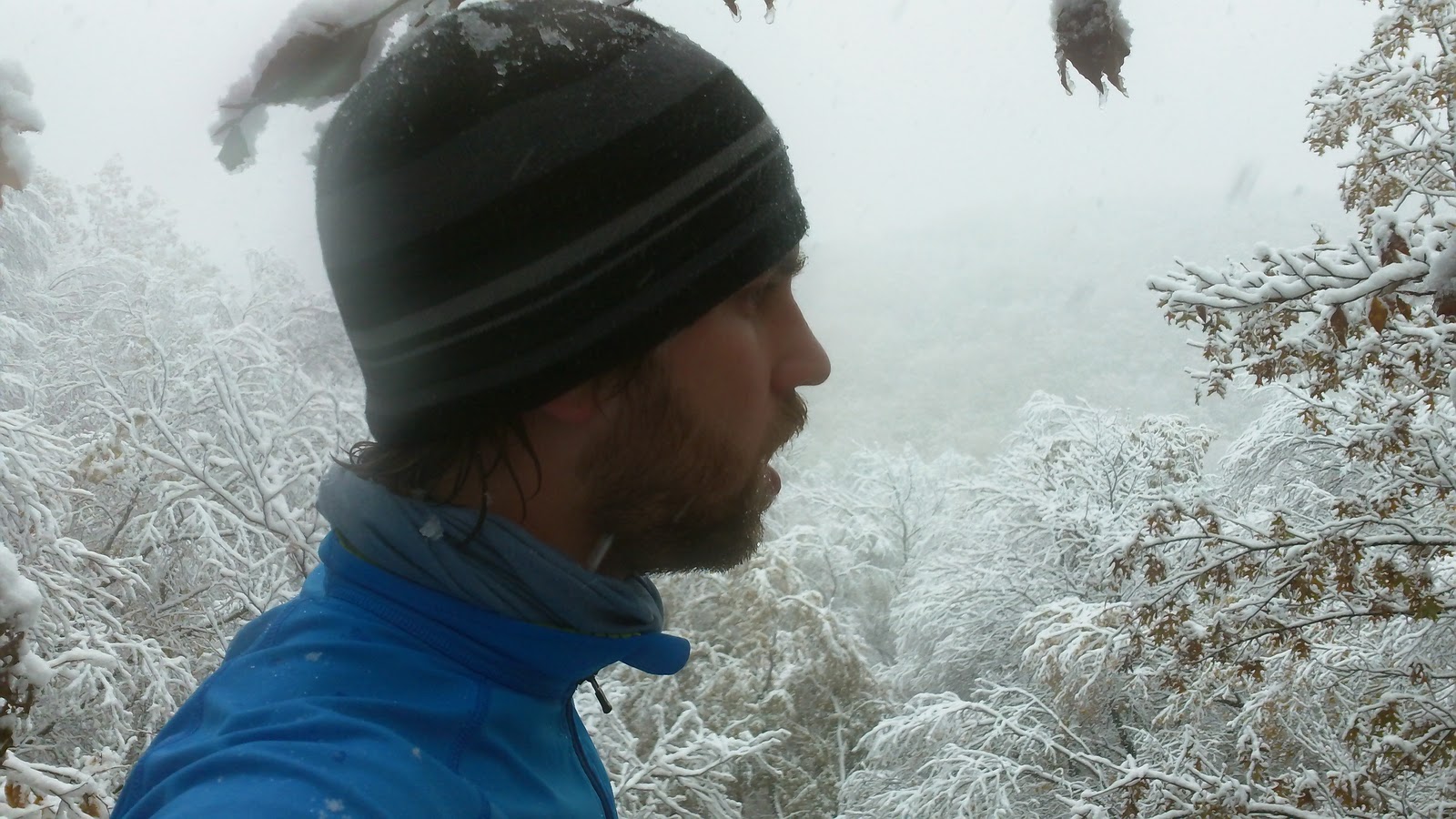
My Head

What makes a good shoe?

Today I received two pairs of running shoes from the Merrell company. As some of you may know, Merrell tends to do things a little bit differently, and strongly encourages the average Joe hiker/runner to test their beta models, and provide them with honest feedback, which I think is awesome, this system helped produce the Trail Glove (review coming soon) and checking out the shoes I got today, I can see that they’ve really got their heads in the right place as far as providing sustainable running shoes for (barefoot) form-oriented mountain runners.
I mentioned in a previous post that my rule as far as running shoes and reviewing them is concerned, is that I require ~100 miles on a pair of shoes before I think I can give an honest assessment of their value, and I plan on sticking to this, it helps that I (when not tapering) run relatively high mileage, so testing a pair of shoes rarely takes more than 2 weeks in my rotation, with perhaps a few extra days to re-compare them to favorites in my pile.
Now for the nitty gritty, there are certain things that I require in order to consider a shoe for racing/every day running usage.
1. MINIMAL Heel-Toe drop, Yes, minimal, a zero drop is preferable, but to be honest if it’s only a few millimeters, it doesn’t effect my gait, and thus becomes a non-issue (greater than 4 mm seems to get annoying, and often will be ghetto zero-dropped by me, over a beer or 3, with a bread knife)
2.Reasonable amount of protection. Depending on the ruggedness of a trail, (or road) the amount of protection necessary can vary (imho). Jason Robillard talks about the same conundrum here. Basically I want enough protection that my feet don’t hurt after a long run/race, but not so much that I can’t feel the ground beneath me, and end up making stupid mistakes resulting in ankle twists, falls, etc etc etc. This is a fine line to walk, and every runner/running shoe is different.
3. Water Drainage. A trail shoe especially MUST drain water well. I cannot tell you how many times in a single run I end up with my foot submerged in water, this water must exist my shoe, and the shoe must dry quickly, this is not negotiable. I do not believe in gore-tex running shoes, I understand the principle, but in my experience, I often find myself in water above the top of the shoe, which results in a gore-tex shoe/boot being filled up with water, and turning into a bucket attached to my foot, not ideal.
4. Traction. A good shoe should track well. There is a fine line between good traction and durability, which is why I insist on 100 miles before i announce my review. Softer rubber holds onto rock better, but also wears much more quickly, the opposite is true of harder rubber. Lugging must be wide enough to shed mud easily, and not turn my trail runner into a mud-caked flat, but also close enough to hold well in less than ideal terrain. Vibram typically makes a good sole… they are not the only reasonable sole out there though, and often I am surprised by what a sole looks like, and how well/not well it performs.
5. Lightweight. The heavier the shoe, the heavier the shoe, you figure it out.
6. Breathable upper. Also self-explanatory. The upper should also keep the foot securely in the shoe,and not blow out too easily (100 miles!)
7. Flexible heel. Allows for natural foot motion
8. Wide toe box. Allows toes to splay, keeps foot motion natural, helps body absorb shock better, leading to less injuries etc etc etc.

That’s pretty much it, I’ve got some reviews queued up, as many of my shoes are beyond the 100 mile mark, as well as some training updates to post soon.

Barefoot Running


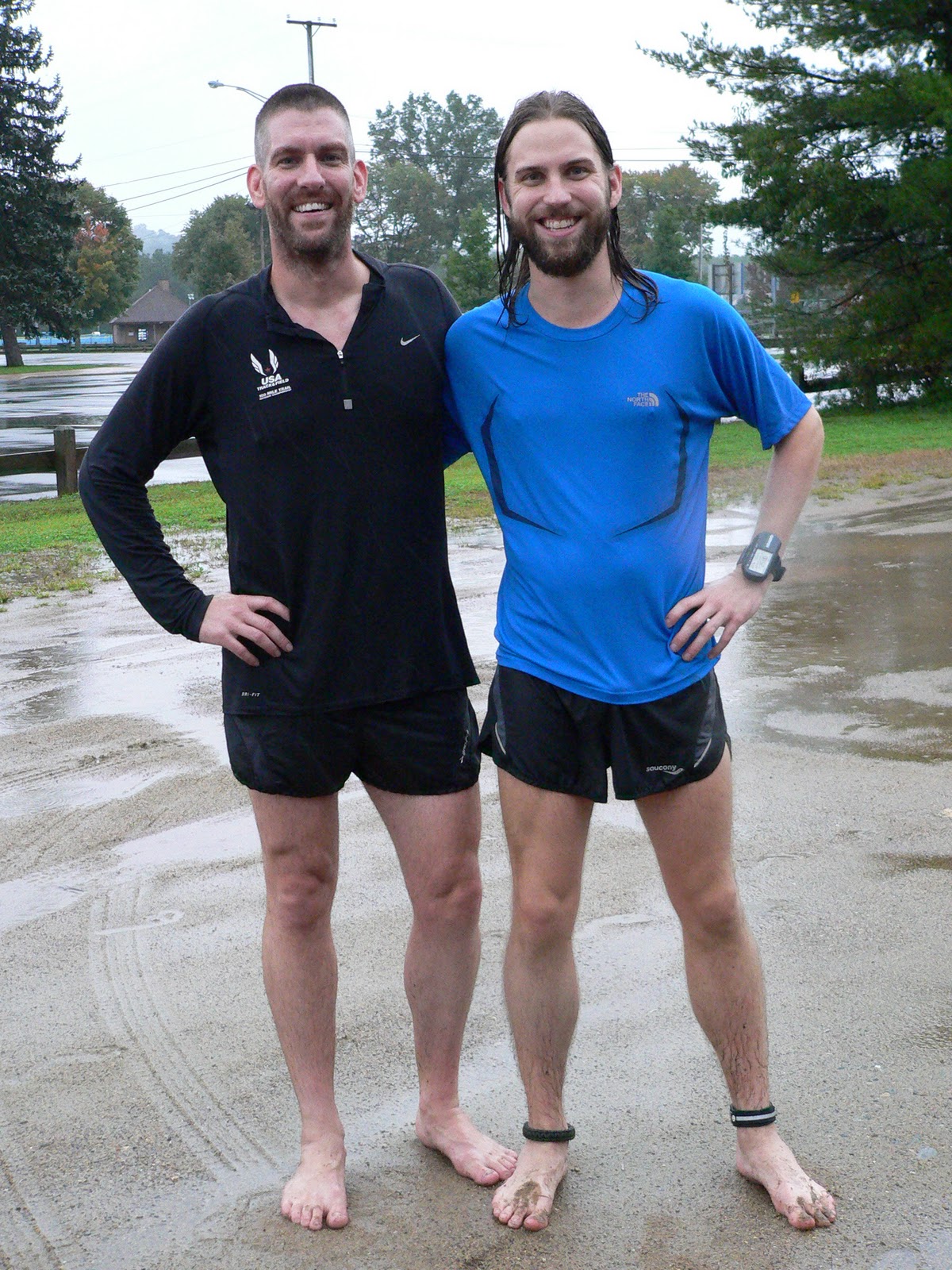
Today I had the extreme pleasure of meeting, running, and attending a clinic with Jason Robillard. He’s a font of knowledge about barefoot running, an experienced ultra-runner, and all-around cool guy.

We ran an eyelash over 3 miles through the rain in bare feet, talked about running, races, and some future plans, and how we both agree, short-shorts are the way to go. He then gave a clinic at Ramsey Outdoor, which was a great information session about barefoot/minimalist running, including a q&a session, and some demonstrations. For anyone who doesn’t know Jason, his blog is fantastic, and is a great resource for anyone wanting to run barefoot, or in minimalist shoes, and if you have the chance to attend one of his clinics, you should definitely do so!