Winter Running

If you read any of the running blogs from the Mountain time zone, you’re well aware that they’re already beginning to experience the joys, and perils of winter running, and here on the East Coast, as a result of an unprecedented October snow storm, we have as well.

Many of my friends, both casual runners, and non-runners often ask me how I maintain mileage over the course of the winter, especially as a trail runner, and since last weekend I remembered just how awesome winter runs can be, as well as the oft forgotten downsides of running in sub-freezing temperatures.
So, since many runners I know tend to reduce their mileage, or go towards the treadmill during the winter, I figure I’d try to explain as best as I could, how I maintain my mileage through season. First, attire, everyone has a different approach to cold-weather running, and much like my summer runs, I try to keep things very simple. A pair of tights (yes tights) lightweight baselayer, and a running wind breaker seem to be the most I wear during winter months. A lightweight pair of gloves, and a hat also are helpful. Many runners tend to overdress for cold weather, and end up actually being too warm. The downside of dressing as I do, is that you WILL be cold for the first few miles, the purpose is comfort in the long run, not in the first few miles.

Now, winter runs have their upsides and downsides, the most obvious downside being the negotiation of temperature/wind, hence the windbreaker and other attire mentioned above. The other, less obvious downsides are the shrinking roads as a result of snow (they get so much thinner!) which of course, makes avoiding cars much more of a problem (run trails). Trails however, get faster it seems, especially in the snow, which seems to fill in the changes in terrain, making for fast downhills, and less worry regarding rock avoidance with the extra cushioning. There is, of course, a lack of traction. I’ve found that on normal circumstances, I fall every ~300 miles or so when running technical trails, usually as a result of some mud, wet rocks, or a concentration lapse. On snowy trails, I fall roughly 1.5 times for every 10 miles, this obviously is a result of poor traction, and i expect the ratio to go down as the season progresses, and I get used to it. 
So why run in Winter? Well, here:

Trail Head
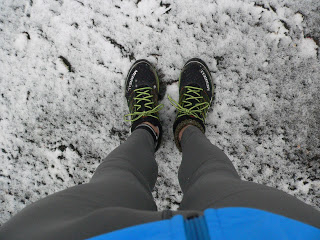
Tights and my Merrell Mix Masters
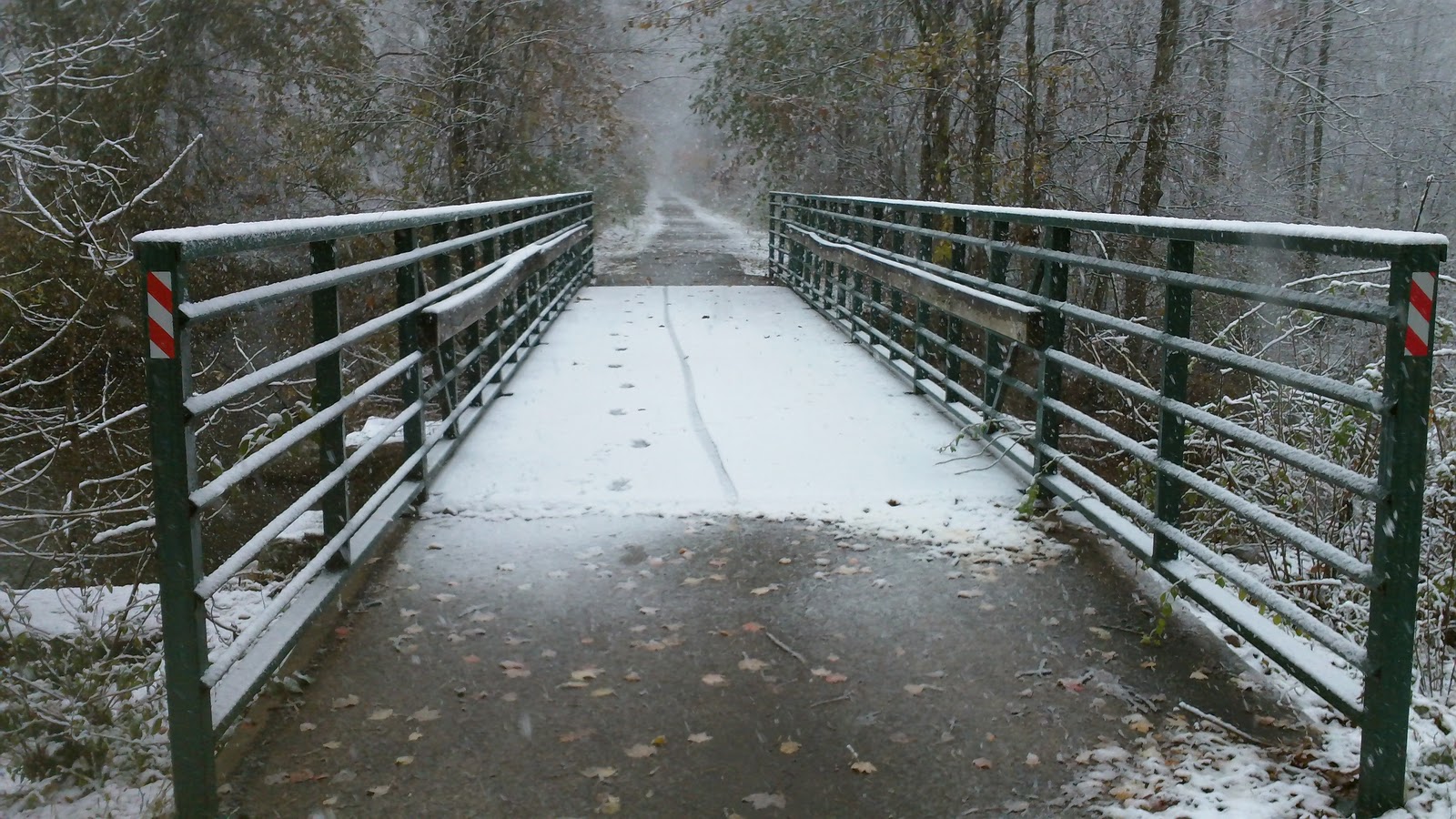
Snowy Bridge on Columbia trail

Blurry Picture, Deer in Snowstorm

Trail heading up Schooley’s Mountain

Long Valley

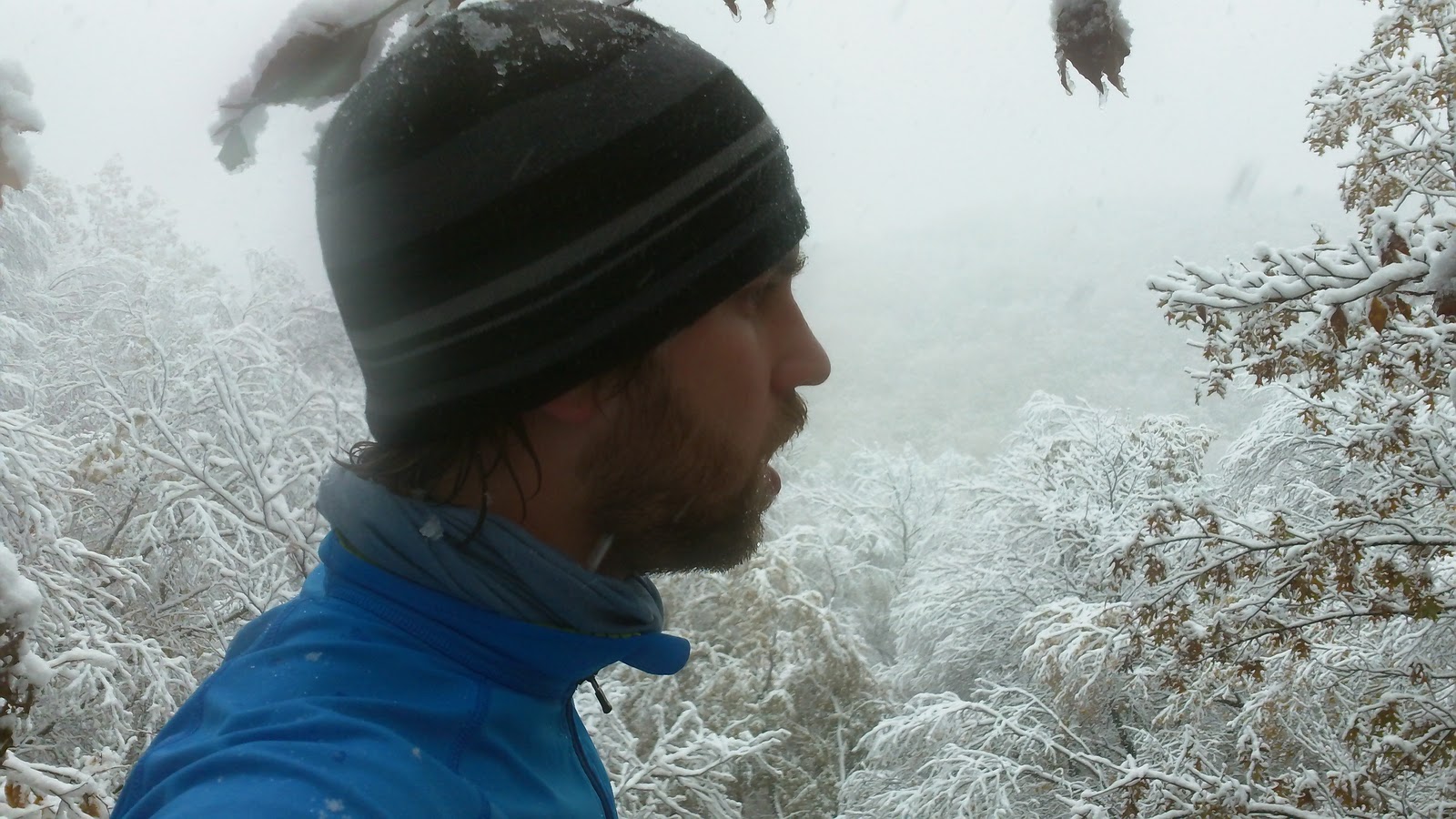
My Head

Post Marathon Recovery

Embarrassingly, my mileage has taken a rather awful turn since I ran the Atlantic City Marathon nearly 3 weeks ago. I recall running a 50k in August, and suffering a similar recover-oriented fate, where a combination of latent soreness, glycogen depletion, and varying certainty regarding my fitness/performance caused me to lag for a few weeks until I felt fully recovered. This run was no different, I attempted a 10 miler about 6 days afterwards, and had the worst bonk I can recall, although my overall time was reasonable. I’ve taken 7 of the past 21 days off, having broken my “streak” the tapering week before the race. Some of these days were schedule oriented (as in, no time to run) and some were a combination of fatigue/laziness, but overall, I’ve got to attribute it to lack of motivation/laziness, which isn’t always a bad thing, and since I have time to let my body rest some, It’s probably advantageous in the long term to do so. Here, however, are the stats:
Miles Oct 17-Nov 5: 51.3
Hourage: 8hrs 9min
This week I’m planning to get back on the horse proper to start preparing for a 50k in January, and a possible 50 miler in Feb, so High mileage, and lots of trails in the near future!

Summary 9/25-10/16

Okay, loooong mileage summary here, hoping to get more scheduled with this soon, but for now, a brief listing will have to do.
9/25 AM 1 mile, barefoot, 9:47
9/26 AM 10 miles, Mt Allamuchy 1:34:10 (PR)
9/27 AM 10 miles, Mt Allamuchy 1:52:42 (recover run)
9/28 PM 1 mile, 9:50 (barefoot)
9/29 PM 20.2 miles 2:44:39
9/30 PM 1 mile, 9:42 (barefoot)
10/1 PM 1 mile 8:23
10/2 PM 1 mile 10:23
10/3 PM 1.31 13:06
10/4 PM 1 9:57
10/5 PM 1 9:13
10/6 PM 5 44:07
10/7 AM 9.66, Mt. Allamuchy 1:57
10/8 PM 1 8:29
10/9 PM 1 9:43
10/11 PM 1 9:08
10/13 PM 5 38:48
10/15 AM 1 8:29
10/16 AM 26.2 3:27:16(Atlantic City Marathon race report soon)
This fundamentally covers my last long run, and major taper going into the AC marathon, in the final week leading up to the marathon, a few super-long music days caused me to inadvertently break my streak, which is a little upsetting, but I’m okay with it, I’ve been running strong since May, without any major injuries, and very much looking forward to some upcoming autumnal runs through the mountains, especially once this lingering soreness from the race disappears, and I can resume my rhythm of a summit tag a day.

Also, all of the single miles mentioned above are done barefoot, in the literal sense, typically slowly for recovery, or form-work.

What makes a good shoe?

Today I received two pairs of running shoes from the Merrell company. As some of you may know, Merrell tends to do things a little bit differently, and strongly encourages the average Joe hiker/runner to test their beta models, and provide them with honest feedback, which I think is awesome, this system helped produce the Trail Glove (review coming soon) and checking out the shoes I got today, I can see that they’ve really got their heads in the right place as far as providing sustainable running shoes for (barefoot) form-oriented mountain runners.
I mentioned in a previous post that my rule as far as running shoes and reviewing them is concerned, is that I require ~100 miles on a pair of shoes before I think I can give an honest assessment of their value, and I plan on sticking to this, it helps that I (when not tapering) run relatively high mileage, so testing a pair of shoes rarely takes more than 2 weeks in my rotation, with perhaps a few extra days to re-compare them to favorites in my pile.
Now for the nitty gritty, there are certain things that I require in order to consider a shoe for racing/every day running usage.
1. MINIMAL Heel-Toe drop, Yes, minimal, a zero drop is preferable, but to be honest if it’s only a few millimeters, it doesn’t effect my gait, and thus becomes a non-issue (greater than 4 mm seems to get annoying, and often will be ghetto zero-dropped by me, over a beer or 3, with a bread knife)
2.Reasonable amount of protection. Depending on the ruggedness of a trail, (or road) the amount of protection necessary can vary (imho). Jason Robillard talks about the same conundrum here. Basically I want enough protection that my feet don’t hurt after a long run/race, but not so much that I can’t feel the ground beneath me, and end up making stupid mistakes resulting in ankle twists, falls, etc etc etc. This is a fine line to walk, and every runner/running shoe is different.
3. Water Drainage. A trail shoe especially MUST drain water well. I cannot tell you how many times in a single run I end up with my foot submerged in water, this water must exist my shoe, and the shoe must dry quickly, this is not negotiable. I do not believe in gore-tex running shoes, I understand the principle, but in my experience, I often find myself in water above the top of the shoe, which results in a gore-tex shoe/boot being filled up with water, and turning into a bucket attached to my foot, not ideal.
4. Traction. A good shoe should track well. There is a fine line between good traction and durability, which is why I insist on 100 miles before i announce my review. Softer rubber holds onto rock better, but also wears much more quickly, the opposite is true of harder rubber. Lugging must be wide enough to shed mud easily, and not turn my trail runner into a mud-caked flat, but also close enough to hold well in less than ideal terrain. Vibram typically makes a good sole… they are not the only reasonable sole out there though, and often I am surprised by what a sole looks like, and how well/not well it performs.
5. Lightweight. The heavier the shoe, the heavier the shoe, you figure it out.
6. Breathable upper. Also self-explanatory. The upper should also keep the foot securely in the shoe,and not blow out too easily (100 miles!)
7. Flexible heel. Allows for natural foot motion
8. Wide toe box. Allows toes to splay, keeps foot motion natural, helps body absorb shock better, leading to less injuries etc etc etc.

That’s pretty much it, I’ve got some reviews queued up, as many of my shoes are beyond the 100 mile mark, as well as some training updates to post soon.

In Favor of Short-Shorts

Now that summer is over, and it’s becoming more necessary to start wearing clothes, I thought I’d try my best to justify my summer attire, or lack thereof. Enter the split shorts. A lot of people find it strange that I would prefer to wear the shortest shorts available to runners, so allow me to explain it.
1. It’s hot outside, so why would I wear more than I need to, more clothes = more sweat, more sweat = more water to carry = slower runs…. you do the math.
2. Freedom of movement. The way that split shorts are cut allows the most freedom of movement I’ve experienced.
3. Better support. Even though longer shorts always come with a bloomer, or some similar support system, the support in split shorts in my experience, is always better. This may be because of the increased potential for a wardrobe malfunction, but regardless, it’s nice to have.
4. It makes a statement. As a runner, I think I need to embrace the good, the bad, and the ugly of being a runner, this includes embracing the style, and the aesthetic. Track athletes, marathoners, and a handful of ultra-runners embrace the short-short, and it’s one of the ways I like to embrace the aesthetic of being a runner.
Plus, these guys seem to dig them:

Scott Jurek

Killian Jornet

Anton Krupicka

Jesse Scott

Weeky Summary 9/18-24

Sunday 9/18
AM: 10 Miles through Allamuchy Mountain State Park with Gene,  1:53:01, 1:01 spent practicing

Monday 9/19
AM: 11.1 miles, Columbia Trail and a double summit of Schooley’s Mtn. 1:48:28, :54 spent practicing (rehearsal day)

Tuesday 9/20
1:51 spent practicing, PM 1 mile barefoot 0:9:25

Wednesday 9/21
AM: 10 miles through Allamuchy, 1:33:45, AM, 2 hours practice, PM  00:48:00

Thursday 9/22
AM: 10 miles, Allamuchy, 1:44:00, PM 1, 2 miles barefoot, 00:20:48, PM 2, Broken Shin Loop (road) 5 Miles 00:41:43, 1:32 spent practicing

Friday 9/23
4:14 miles, 00:38:06 the final 3 with Jason Robillard, done barefoot. 1:42 practicing

Total miles: 64.24, Total Time: 9:10:11, Practiced 9:48:13

Which makes for a relatively light week musically, and medium distance running week. Not bad for still adjusting into a new schedule, and finally having my ankle feel solid after 3 weeks of running with discomfort from a gnarly twist. 

Barefoot Running


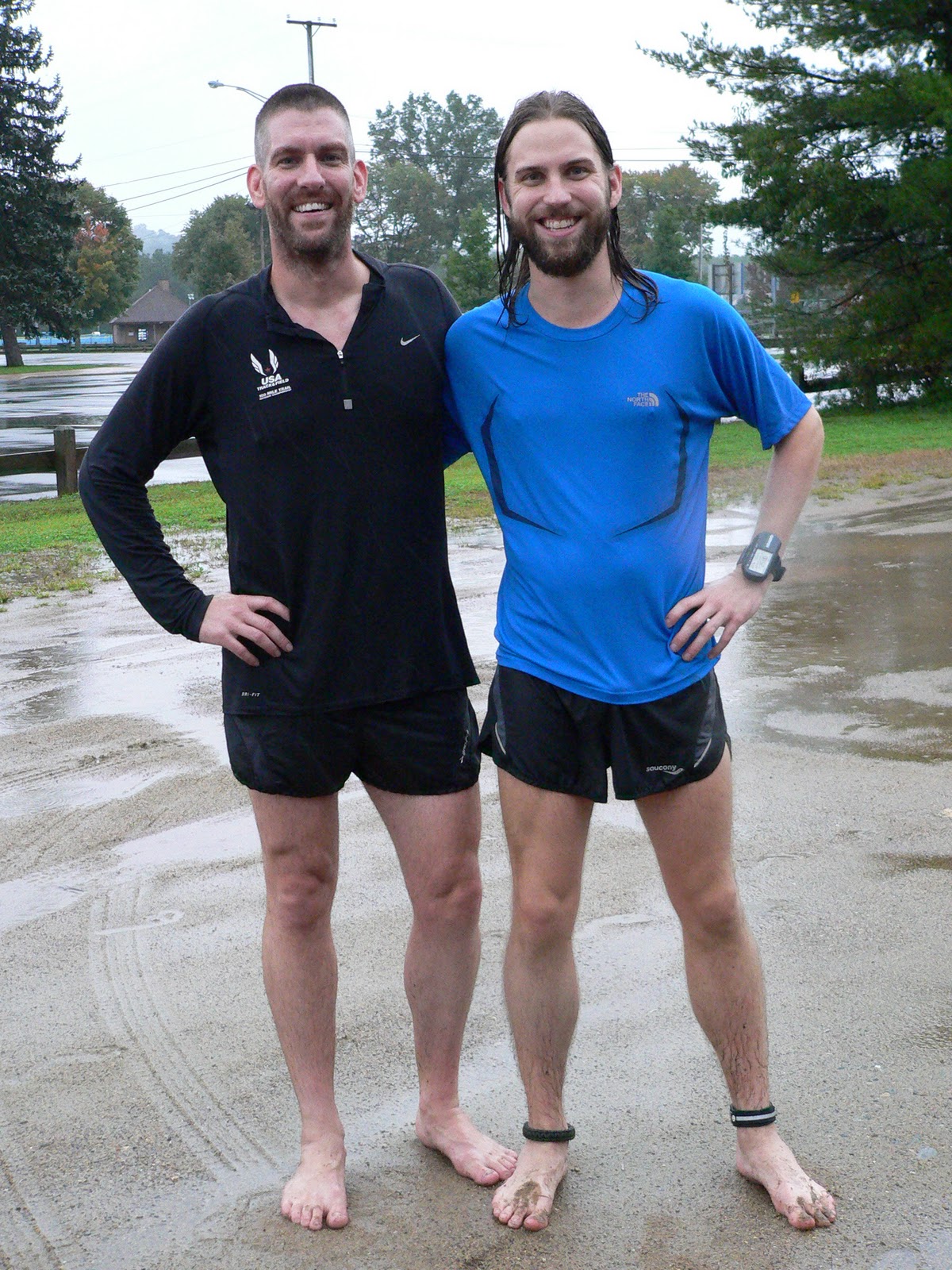
Today I had the extreme pleasure of meeting, running, and attending a clinic with Jason Robillard. He’s a font of knowledge about barefoot running, an experienced ultra-runner, and all-around cool guy.

We ran an eyelash over 3 miles through the rain in bare feet, talked about running, races, and some future plans, and how we both agree, short-shorts are the way to go. He then gave a clinic at Ramsey Outdoor, which was a great information session about barefoot/minimalist running, including a q&a session, and some demonstrations. For anyone who doesn’t know Jason, his blog is fantastic, and is a great resource for anyone wanting to run barefoot, or in minimalist shoes, and if you have the chance to attend one of his clinics, you should definitely do so!

Miles to go before I sleep

I have promises to keep; a job, full-time school as a doctoral student in music, and all of the assorted reading, listening, score study, and of course, practicing that is required to maintain that part of my life. On the polar opposite side, I have my running life, which occupies a lot of time, part of it is a giant release from the stresses of musicianship, and the simplification of everything that seems to result from hitting the trail before dawn, and running until I have to be somewhere, or on the best days, until I can’t anymore, has really put a lot of things in perspective, and helped me to evaluate things more clearly. Not to mention the overwhelming sense of good that has come out of it, having finally secured a stress reliever that feels natural, and pure, has helped me maintain my “cool” in ways I would have never imagined, there is no longer any need to sweat the small stuff, because in the grand scheme of things, it’s just not worth it.

Now it’s my goal to maintain a ~60-80 mpw average (excepting tapering) for the duration of the semester, in addition to my other life, and through the blog I’m planning on posting my mileage as well as my time spent running, AND my practice hourage (dedicated practice, excepting lessons/rehearsals/etc). This will hopefully keep me honest on both accounts, and hopefully fuel my practicing and running work ethic by having everything written down, and posted. On that note, I HAVE been keeping a running log, and have not missed a day since May 23rd (minimum 1 mile) and since that date I have logged 750.98 miles. I documented my practice time in the past, and my estimate is that I’m somewhere in the 8-9,000 hour range total, but my logging has been sporadic (mostly logging as a form of motivation, as this upcoming log will be) so this total number of hourage is at best, an educated guess. So I’ve added times to my running log, and restarted a practice log based purely on time, free, for the public to see. Now for those miles before I sleep..

Advantages

Many of my friends (okay, namely the Highlands Hashers) ask me how my running effects my “professional” life. I’ve always found this to be a difficult question, short of giving the usual stock answers: lowers stress, keeps me fit, etc etc. Now these are NOT the reasons I run, the reasons I run will likely be documented in a following post, but I can assure you that fitness/stress are not what gets me out of bed at 6am to hit the trails…. This past week however, with the start of the school year, comes the usual ring of academic-related auditions, mostly for seating/ensemble placement within the department. Anyone who races has an idea of the stress level associated with auditions, however, the engagement of the fight/flight mechanism is (in my experience) advantageous for a footrace. Unfortunately, as a clarinetist, the fight/flight mechanism is extremely disadvantageous for a performance, increased heart-rate, adrenaline, sweat, none of this bodes well for musical performance.

How has high mileage helped this? Well, as a result of my weekly mileage, and the ensuing fitness level, my resting heart rate is low, I refuse to check it, since I don’t really dig the whole numbers thing, especially regarding heart rate, VO2 max etc etc, but trust me, its low. This means that when my flight mechanism does kick in during the audition setting, the ensuing heart-rate increase begins from a much lower level, resulting in a stressed heart-rate being substantially lower than I can recall ever having in that situation! Not to mention the additional confidence from knowing what you’re really made of. Having run a self-supported ultra-marathon, hiked solo through the Whites and Mahoosucs, grown a massive beard, and lost my fair share of auditions where more than pride is on the line, I’m able to approach the audition in a much calmer fashion than I would have as recently as a year ago, nevermind 6 years ago.

The (relative) success of last weeks 2 auditions, and how I think my running has affected my energy levels throughout these has motivated me to run, and practice more. I’m now more thoroughly looking forward to upcoming races (50k’s 50 milers and a ?hundred?) recitals, and whatever else life throws my way!

Bad(?) Runs

Right now, my tendency is to run a handful of different runs over the course of the week, mostly based around a ~11 mile trail run that seems to be about half technical trails/elevation changes, and 1/2 rail-trails, which are well groomed, relatively fast, and moderately scenic, but overall very flat, think of old trains, and the kind of terrain they would prefer.. you get the jist of it. Running the same routes on a regular basis has its advantages, namely the knowledge of roughly how long it’s going to take, how bad the after-run bonk is likely to be, which shoes will be best, etc etc. The downside to these repeated runs is of course, knowing your splits, which can make recover runs, and other such slower endeavors troublesome, and since I do have an inner competitor, I find myself trying to PR on these courses, or getting bummed out/excited when I look at my watch and realize where I am.

What does this have to do with bad runs? In my experience, I find myself challenging these regular splits, constantly monitoring myself against previous times, which sometimes gets me out of listening to what my body is telling me. For example, today I left my car, and immediately began running rather quickly ~7min/mile which I knew was unsustainable for the duration of the run, but it felt good, and I beat my best splits to the turn from the rail trail to the mountain. This was listening to my body, I felt strong, and ran strong, but beginning up the mountain my legs began to weaken, likely a result of substantial mileage following my longest run to date (31 miles last week) which has left me feeling a bit sluggish in the legs. Normally I would have backed off here, but instead, I continued pacing up the hills, a pulled through the low.

So far, so good, and pushing through the periods of softer legs has its upsides, mostly harnessing gumption, and building strength both physically and mentally. I made it through the two loops of mountain running and back to the rail-trail a few minutes ahead of schedule, even taking a few minutes to enjoy the view from the top. This is where everything started to fall apart. It’s been my plan to run on a rather low fuel supply, usually soon after I wake up, I’ll consume a GU or something similar (clifshot, powerbar gel) and begin my run, with no additional nourishment. This usually works out well, teaching my body to burn fat, and lessening the effects of sugar-depleted bonking. Today, I took the time for a cup of coffee first, then began my run.

With the three (easy) miles to go back to my car, all of my minor discomforts became exacerbated. The typical aches in my legs were tolerable, and a slight tinge in my left achilles tendon felt tight, but not painful, certainly not stop-the-run painful. I was minutes ahead of schedule, and posited to best my time for this particular run by a substantial amount when, heartburn strikes. This, to me, is the biggest offender, and takes the award for most likely to halt my run. Leg pain, no problem, foot pain, fine, tiredness, meh, whatever, heartburn…. let’s talk.

Now it’s likely that this is a result of the coffee/empty stomach/low calorie combination, and then running hard for 90 minutes, in fact, I can think of few other calculations that would explain it. This, however, turned what was a great run, into something miserable, with no choice but to keep moving (~3 miles to the car).

What do I learn? First and foremost, I’ll avoid coffee immediately prior to runs, especially if I’m on an empty stomach. Beyond that, hitting my splits every day on my regular courses is something I’m going to try to de-emphasize, while beating a PR is always nice, it’s best to listen to the body, and run your run, especially as a trail runner, where the point of the run is the run, and the environment it takes place in.

So the bad run, or in this case, a failure run is always for me, a learning experience, and helps me to fine tune my approach to mileage, and pacing. It’s always a discouraging blow, especially when things go from swimmingly to miserable, but I get to do it again tomorrow, and the the next day…